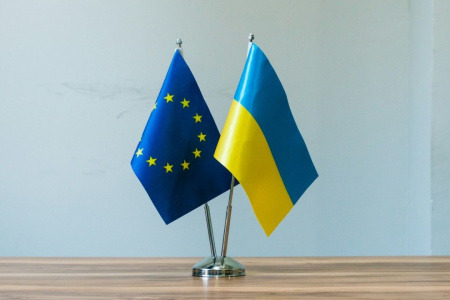
The European Union has officially approved its 19th package of sanctions against Russia, marking another step in the bloc’s efforts to weaken Moscow’s war economy and reduce its dependence on Russian energy. The decision came after Slovakia lifted its veto, ending weeks of deadlock among member states.
The new measures target major parts of Russia’s economy including energy, finance, and transport. It includes 69 new individual listings and further measures against Belarus for supporting Russia’s aggression.
Energy. A central feature of the new measures is a phased ban on Russian liquefied natural gas (LNG) imports, which will come into effect in January 2027 for long-term contracts and within six months for short-term contracts. The EU is extending sanctions to third-country operators enabling Russia’s oil exports, including two refineries and an oil trader from China and Litasco Middle East DMCC, a Lukoil subsidiary in the UAE. In total, 117 additional vessels from Russia’s shadow fleet have been blacklisted, bringing the total number of designated ships to 557.
Finance and crypto. Recognizing Russia’s growing use of cryptocurrency to bypass sanctions, the EU has now prohibited transactions involving the state-backed stablecoin A7A5, which has been used to finance war-related activities. It has also sanctioned banks and traders from Russia, Belarus, Kazakhstan, Kyrgyzstan, Tajikistan, the UAE, and Hong Kong for helping Moscow evade restrictions. Moreover, the EU has also prohibited all engagement with the Russian National Payment Card System (‘Mir’) and the Fast Payments System (‘SBP’).
Diplomats and accountability for war crimes. Russian diplomats must now notify EU states in advance when traveling beyond their country of accreditation to curb intelligence activities. The EU has also introduced new measures targeting those responsible for the abduction and forced transfer of Ukrainian children.
Military, trade, and services. The EU has imposed new restrictions on companies supplying military and dual-use goods to Russia and Belarus. Export controls have been expanded to cover electronics, chemicals, alloys, and acyclic hydrocarbons, key materials supporting Russia’s defense and industrial sectors. The package also introduces service bans, limiting European provision of AI, high-performance computing, and tourism-related services to Russian entities.
Belarus. The package extends similar trade and technology restrictions to Belarus, targeting its military-industrial complex and crypto-related payment services.
What’s next?
While the move underscores the EU’s unity in supporting Ukraine, divisions remain as countries like Hungary and Slovakia continue to question the long-term impact of sanctions on European industries. With the 19th sanctions package now adopted, EU foreign policy chief Kaja Kallas announced that the Union will soon begin preparations for a 20th package, which could possibly target Russian nuclear imports, key metals such as aluminum and nickel, dual-use technology exports, or third-country enablers of sanctions evasion. DMX Associations closely follows all developments related to EU’s sanctions against Russia, so follow our website and LinkedIn page for the latest insights.