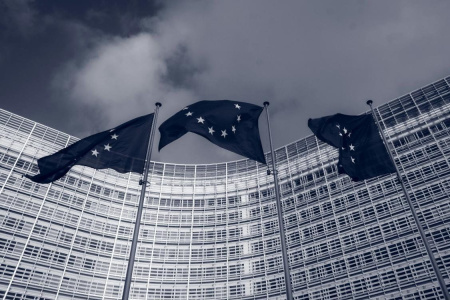
Brussels is pressing Beijing to accept quotas on Chinese exports to the EU market as negotiations enter their final stretch, with an October deadline fast approaching and the prospect of defensive trade measures looming if no agreement is reached.
The European Commission, which negotiates trade policy on behalf of all 27 EU member states, is seeking Chinese acceptance of limits on specific product categories as part of a broader effort to rebalance a trade relationship that European officials describe as increasingly unsustainable. Intense negotiations between both sides have been underway since June, when the Commission set an October deadline for tangible progress.
China has so far resisted the EU's approach. The Commission has pushed for so-called voluntary export restrictions on electric vehicles — a mechanism under which Beijing would agree to limit its own exports rather than face EU-imposed defensive measures — but China's trade minister rejected the proposal earlier this month. The distinction matters: voluntary restrictions would allow both sides to frame the outcome as a negotiated arrangement rather than a confrontation, but Beijing's reluctance to accept any form of quota has narrowed the path to agreement.
Senior EU trade officials have kept up the diplomatic pressure. The Commission's Director General for Trade, Ditte Juul Jørgensen, travelled to China last week for two days of discussions, and EU Trade Commissioner Maroš Šefčovič is due in Beijing on October 8 and 9 for political-level talks ahead of a key EU leaders' summit in Brussels. In a further signal of intent to keep negotiations alive, the Commission has delayed the adoption of trade defence measures targeting the EU chemical industry — one of the sectors most exposed to Chinese competition — to avoid prejudicing the talks.
The broader stakes are significant. EU Industry and Trade Commissioner Stéphane Séjourné has described the rebalancing of trade with China as "existential" for Europe, with the Commission estimating that 250,000 industrial jobs were lost last year alone, particularly in energy-intensive sectors and automotive supply chains.
Whether Beijing will move before the October deadline remains the central question. With little sign of flexibility on quotas so far, the coming weeks will be critical in determining whether the EU proceeds with unilateral trade measures or secures a negotiated framework.
At DMX Associates, we are monitoring EU-China trade developments and their implications for business strategy, market access, and supply chain planning across the region. Stay up to date via our website and LinkedIn page.