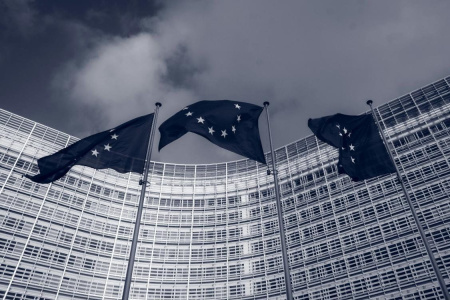
Greece is asking the European Commission for greater fiscal flexibility to shield households and businesses from a renewed energy price shock, but the request is exposing a growing divide among member states over how much public money can realistically be spent. In a letter dated 30 September to Commission President Ursula von der Leyen and Eurogroup President Kyriakos Pierrakakis, Prime Minister Kyriakos Mitsotakis argued that the crisis is lasting longer than expected, with escalating attacks on Middle Eastern energy facilities threatening to make it both an economic and a political challenge.
The numbers explain the urgency. Since the US and Israel launched their war against Iran on 28 February, pre-tax gasoline prices in the EU have risen 53% and diesel 66%, while gas has climbed from just over €30/MWh to around €70/MWh. Electricity has averaged above €100/MWh in most member states over the past month, against €42/MWh before the conflict, with some markets approaching €200/MWh.
Athens proposes that temporary support measures be excluded, up to a limit, from the EU's net-expenditure indicator, which caps the growth of day-to-day government spending. It also wants governments to be able to count additional VAT revenue generated by energy-driven inflation. Mitsotakis criticised the Commission's emphasis on reducing energy demand, arguing it cannot be the main course of action.
Domestic politics are shaping the ask. Greece carries the largest national debt in the EU, and generous energy, fuel and farming subsidies, alongside income and property tax cuts, are complicating efforts to reduce it ahead of elections in 2027. Italy, with the second-highest debt in the bloc, has made similar calls, with Prime Minister Giorgia Meloni reportedly pressing von der Leyen on 30 September. Others are less receptive: Belgian Prime Minister Bart De Wever has ruled out broad measures, saying there is simply no money.
The request is expected to be discussed by energy ministers in Brussels later this month and at next year's summit of EU leaders.
At DMX Associates, we are monitoring developments in European fiscal and energy policy and their implications for business and investment across the region. Stay up to date via our website and LinkedIn page.